Download PDF A Guide to Rational Living, by Albert Ellis
Actually, we cannot compel you to review. But, by motivating you to read this A Guide To Rational Living, By Albert Ellis it could assist you to understand something new in your life. It is not costly, it's very budget friendly. Within that budget friendly cost, you could get numerous things from this book. So, are you sill question with this boom will provide you? Allow make change to earn much better your life and all life in the world.
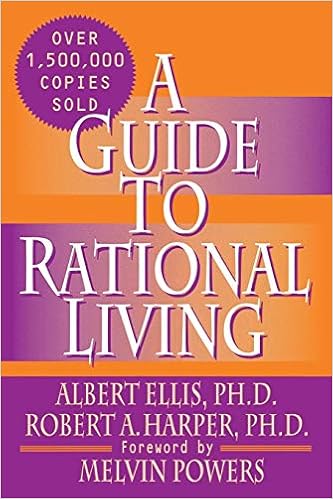
A Guide to Rational Living, by Albert Ellis

Download PDF A Guide to Rational Living, by Albert Ellis
Invite again, we always welcome the viewers to be in this website. Are you the newbie to be viewers? Don't bother. This web site is in fact available as well as suitable for every person, Additionally, the individual that truly requires ideas and also sources. By this condition, we always make updates to obtain everything brand-new. Guides that we gather and give in the lists are originating from lots of sources inside and beyond this nation. So, never be uncertainty!
As well as right here, that book is A Guide To Rational Living, By Albert Ellis, as you require it conforming to the topic of your difficulties. Life is challenges, tasks, and also duties are additionally obstacles, as well as there are several things to be obstacles. When you are definitely overwhelmed, just get this publication, as well as select the crucial information from the book. The material of this may be complicated and also there are several motifs, but reviewing based upon the subject or reading web page by web page could aid you to comprehend merely that book.
When accelerating and also promoting this publication we are likewise so sure that you can acquire the lesson as well as expertise conveniently. Why? With your basic understanding and ideas, your option to blend with the lessons supplied by this publication is very impressive. You could locate the best choice of exactly how the presented book in this lesson is obtained. And now, when you are really locate of this kind of publication subject, you could acquire the file of the book in this rest.
So, when you have found guide and also attempt to read it earlier, you can be one step forward to your buddies who have not read it yet. This publication doesn't offer you anything, however it will give you several points to find out and act. When you have actually determined to begin reading as your habit, you can appreciate A Guide To Rational Living, By Albert Ellis as one of the material to review first. Reading will not be obliged, actually. Checking out is one's need that can looking at anybody else. You can be part of the book enthusiasts and excellent viewers to constantly review and also finish the useful publications.
Direct, get-to-the-heart-of-the-problem methods to teach you what you do to needless upset yourself and make yourself emotionally stronger by the creators of the most popular forms of therapy in the world. From the foreword by publisher Melvin Powers: Years ago, after two decades of burning the midnight oil, reading manuscripts which professed to have all the virtues this one actually possesses, I found the original New Guide to Rational Living—a gem that has become a classic in the field of psychology. Since then, I am delighted to say, I have sold 1.5 million copies of this book in previous editions. Numerous readers have thanked me for making the book available and have related how positively it has affected their life. Undoubtedly this new, updated third edition will prove particularly valuable to present-day readers, who face unprecedented challenges in daily living. Those who have read a large number of euphoric and inspirational books without achieving lasting success will particularly appreciate this book. For although A Guide to Rational Living makes no promises, it can help readers more than all the other books put together. In the first chapter of this extraordinary new edition of A Guide to Rational Living, Drs. Albert Ellis and Robert A. Harper express the hope that readers will not “jump to the conclusion that we hand out the same old hackneyed, Pollyannaish message that you may have long ago considered and rejected as having no practical value.†This book, unlike others you have probably read, employs none of the jargon usually associated with psychology or psychiatry, and it may well prove to be the best book on psychotherapy for laymen ever written. It can provide emotionally disturbed individuals with many answers they seek, and it can help everyone to feel better about themselves and to deal with their lives more effectively. The authors use a unique method of projecting their solutions to common problems. Thus, they point out that the individual who feels inadequate and insecure suffers from, for example, “Irrational Belief No. 2: The idea that you must be thoroughly competent, adequate, and achieving.†Drs. Ellis and Harper use ten such ideas to bring out the scope of their psychotherapy, with subtle, helpful solutions that reflect their vast experience as therapists. They have training and a host of case histories, to buttress their advice. This not only makes for a more interesting book but creates confidence in the reader concerning the techniques suggested, all of which have proven effective in a clinical setting. Their direct, get-to-the-heart-of-the-problem methods show wide variance with most orthodox treatments that drag on interminably with clients never quite knowing where they stand. As far as I can see, here certainly lies, along with group therapy, the direction psychotherapy will take if it intends to make a real contribution to comprehensive health. If you feel you have the rigorous honesty necessary to conduct self-analysis, this book will be the most important one you have ever read. And it will seem a boon to those who cannot pay the high fees charged for individual treatment. You have my best wishes as you join the 1.5 million people who have read and greatly benefited from A Guide to Rational Living since my publication of the first edition. You have chosen to read a book that has set the standard and that likely will remain the standard for years to come. Melvin Powers, Publisher Wilshire Book Company
Your recently viewed items and featured recommendations
›
View or edit your browsing history
After viewing product detail pages, look here to find an easy way to navigate back to pages you are interested in.
Product details
Paperback: 233 pages
Publisher: Wilshire Book Co; 3rd edition (August 1, 1975)
Language: English
ISBN-10: 0879800429
ISBN-13: 978-0879800420
Product Dimensions:
5.2 x 0.7 x 8.2 inches
Shipping Weight: 13.8 ounces (View shipping rates and policies)
Average Customer Review:
4.2 out of 5 stars
192 customer reviews
Amazon Best Sellers Rank:
#19,037 in Books (See Top 100 in Books)
I had never heard of REBT but I came across its concepts in a psych article and thought it was enlightening: The idea that the key to improvement isn't to be more positive, but rather to be more RATIONAL, and more broadly that by controlling our beliefs we can alter our moods. This basic premise is brilliant and at the time of the original publishing date, it was revolutionary and controversial.In fact, the first 5 chapters (which you can arguably skip) go into the science behind this theory and takes a lot of time to refute or respond to rebuttals from other doctors and researchers who questioned Ellis and Harper's theories. While I see the value in these chapters that aim to explain and set up the theory behind their methods, I found them a bit redundant and dry.The really helpful part is in the description of the most common irrational beliefs and how to alter your thinking so they don't depress or enrage you. I saw this list online and it is what inspired me to buy this book, so I will put it here for you:1. The idea that you must have love or approval from all the significant people in your life (101).2. The idea that you absolutely must be thoroughly competent, adequate, and achieving or The idea that you must be competent or talented in some important area (115).3. The idea that other people absolutely must not act obnoxiously and unfairly, and, that when they do, you should blame and damn them, and see them as bad, wicked, or rotten individuals (127).4. The idea that you have to see things as being awful, terrible, and catastrophic when you are seriously frustrated or treated unfairly (139).5. The idea that you must be miserable when you have pressures and difficult experiences; and that you have little ability to control, and cannot change, your disturbed feelings (155).6. The idea that if something is dangerous or fearsome, you must obsess about it and frantically try to escape from it (163).7. The idea that you can easily avoid facing many difficulties and self-responsibilities and still lead a highly fulfilling existence (177).8. The idea that your past remains all-important and because something once strongly influenced your life, it has to keep determining your feelings and behavior today (187).9. The idea that people and things absolutely must be better than they are and that it is awful and horrible if you cannot change life’s grim facts to suit you (197).10. The idea that you can achieve maximum happiness by inertia and inaction or by passively and uncommittedly enjoying yourself (207).I thought going into this that #1 was going to be the chapter that best applied to my life, but as I read I realized how much of my stress actually stems from #3. I didn't realize how much judgment I was spewing based on this irrational belief, and it also explained fights I've had with others when I've been on the receiving end of that irrationality.This book gives advice based on both sides of the fence, and has some nice sections on fostering more rational self-talk as a way to alleviate crippling feelings.The other thing that was helpful for me was realizing that I was already practicing a lot of this, and it made me thankful for my father who always challenged my perspectives whenever I got worked up about "nothing." I also recently had a friend who was telling me that I am too calm and I should be more upset about things (my dysfunctional childhood, the loss of a loved one) and I got kind of worked up and wondered if I was "in denial" or "too cold." Reading this made me realize that I was actually responding in a really healthy way--letting myself feel deep emotions but snapping out of it, and approaching my life from the "big picture," and thinking rationally as a way to stave off long-term depression, resentment, and anxiety.I didn't give this 5 stars because of the writing style and awkward client conversations that are used as the primary examples for each irrational belief.This was first published in 1961, and it shows. It is rather dated and the diction and conversations reveal its age. I found it amusing, but I could see how a modern reader might be alienated by it, and I wonder if an updated version might be helpful.Additionally, the writers come of as glib, arrogant, and insensitive. They're almost mocking the clients, at times, and think of their approach to psychoanalysis as "tough love." They were speaking very nonchalantly about topics like death and suicide. They kind of encourage people to "just get over a death" by realizing that "it isn't a DISASTER" and "YOU're not the one who is dead." It was pretty awkward, and I felt myself cringing. I do understand that they talk about "healthy grieving" and encourage people to have deep feelings; rather they are aiming to discuss neuroses, and use an example of a man who was still grieving 7 years later over his mother's death as intensely as the day after (to exemplify irrational belief #5).Also in their defense, I appreciated (at times) their levity, which highlights the absurdity in some of the clients' beliefs (it is also helpful to laugh at yourself when you are thinking so crazily), but it was often strange and even uncomfortable to read their fairly impersonal recount of their clients' issues and to make light of grave topics. Saying things like, "if you're children die it isn't the end of the world," or "if this is so upsetting, then you can commit suicide" really detracts from their credibility.I also recognize, in defense of the authors, that the conversations are excerpted and probably taken out of context, being used to highlight the irrationality of the beliefs (which is what this book is about, after all) rather than to highlight their bedside manner, But I can see this turning off readers. Personally, I think that some combination of empathy and reasoning may be the ideal, and I would NOT recommend speaking to friends like this.As a whole, I would recommend this book and think it has the potential to change the way you think, and in turn the way you feel. I know a few people with depression and anxiety issues, and this has also helped me understand them (what they're thinking and why it is so detrimental to their mental health). I am aiming to change the way I communicate with both myself and with these friends.
I bought this book after reading about half of David Burns Feeling Good and seeing recommendations for this book in those reviews. Personally, I am glad that I read Feeling Good before I read this book, as Feeling Good was a fantastic introduction to the power of my own mind over my feelings. Personally, I suffer from depression, and I've been using both of these books as tools to try to work on recovering from my illness.Concerning A Guide to Rational Living, yes I would recommend this book. It's not nearly as easy to digest as Feeling Good, so I do think it's important to start there, but there are some very helpful things in this guide that I didn't take from Feeling Good. I believe Feeling Good is the better place to start because it has a stronger emphasis on recording your automatic thoughts (described here as Irrational Beliefs by Ellis). Since Feeling Good taught me how important it was to write distorted thoughts, I was able to use the tools from that book as I went through Ellis and Harper's book.Particular things in this book that were keys to my personal well being were the chapters, "Overcoming the Influences of the Past," and "Conquering Anxiety and Panic." Influences of the past was an integral chapter for me, because after I read through that chapter, I was able to reflect on my feelings towards my parents and forgive them for the things I still blamed them for. There was a very particular passage explaining that people create rules for themselves that allow them to continually revive the pains they felt when they were younger. I was able to address this rule within myself and find a new token of peace.I haven't finished the book, I'll admit. I only just finished the chapter, "Conquering Anxiety and Panic." I feel this chapter too helped me to consider what it is that's bothering me with a particular issue I have been struggling with for years. No, I don't think this feeling is completely removed from me, but I have had the luxury of beginning to chip away at it with the tools in this chapter.The book does suffer from one thing--constant redundancy. It seems that Ellis and Harper stumbled upon one cognitive rule and then tried to find 150+ different opportunities to rephrase it. They really enjoy the words, "terrible," "horrible," "awful," and "must." Though the book does occasionally become repetitive, it's message is no less powerful. You are acceptable, with flaws, with goods, with bads, and the way you view the world is bringing you more pain than you deserve. Through it's repetition, the book hopes to drill in your mind a new way of considering reality that allows you to treat yourself with more dignity and respect.Much of the content is beautiful for the freedom it offers the reader once s/he digests and accepts the philosophy. I believe this book can be a powerful tool for you in overcoming the issues that have tortured you for years. It's not perfect (which you'll learn is a fantasy anyway), but it teaches you something useful, which is the most you could ask for.
This is a great book. I found the behavioral model he describes to be pretty simple, easy to understand and pretty accurate. It's not the event that upsets us but what we think about it that determines if it is bad or not. I am applying much of what Dr. Ellis says to several areas of my life and have found them to be very accurate and helpful. I'm able to cope with being unemployed at the moment, my childhood, and a breakup of a friendship that I valued.The only problem I have with the book is that some of the phrasing in it is pretty awkward or difficult to understand without having to read it several times. I am on the second read of this book and am highlighting areas that have helped me cope with some stressful situations. I highly recommend it to anyone who is having a problem coping with some difficult areas in his/her life.
A Guide to Rational Living, by Albert Ellis PDF
A Guide to Rational Living, by Albert Ellis EPub
A Guide to Rational Living, by Albert Ellis Doc
A Guide to Rational Living, by Albert Ellis iBooks
A Guide to Rational Living, by Albert Ellis rtf
A Guide to Rational Living, by Albert Ellis Mobipocket
A Guide to Rational Living, by Albert Ellis Kindle